What should have been a straightforward announcement – a US strike on a “drug-carrying boat” has now mutated into one of Washington’s most confusing, shape-shifting narratives in recent memory. The 2 September attack began as a televised boast in the Oval Office, a quick rhetorical victory lap. But as days passed and details leaked, the event turned into something else entirely: a moving target, a dispute over facts, and a question lawmakers now whisper out loud: did the United States commit a war crime?
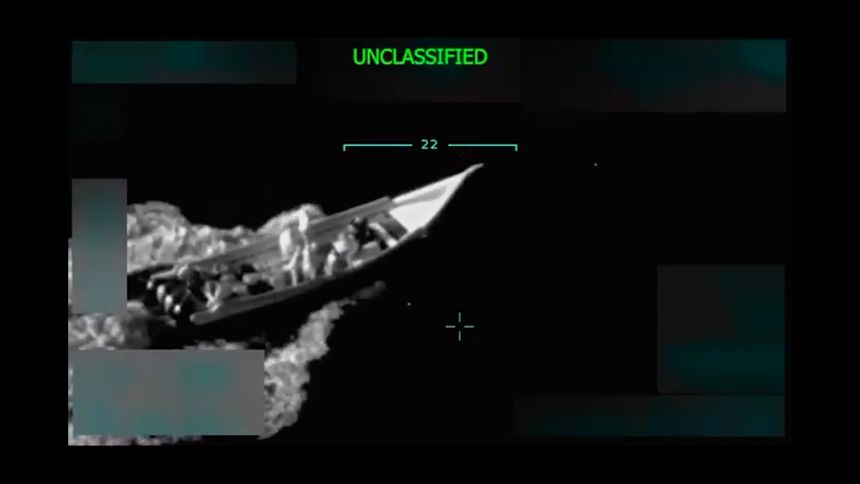
From the start, almost nothing lined up. Trump said the vessel was shot “moments ago” and was heading to the US. Hours later, his Secretary of State guessed it was “probably headed to Trinidad.” Then he reversed himself the next day, insisting the boat was eventually US-bound after all. The administration insisted they knew “exactly” who was on board, but provided no explanation for why the story kept shifting every time a microphone appeared.
The first strike reportedly left two people alive, clinging to a burning wreck. According to a Washington Post report, a second strike – the one that actually killed them – was ordered to finish the job. The Pentagon furiously denied it, calling the reporting false and inflammatory. But members of Congress from both parties weren’t convinced, and for once, Washington achieved something close to bipartisanship: equal suspicion.
Because if the second strike was knowingly carried out on survivors, the term “double-tap” stops being internet slang and becomes a legal liability, the kind of decision that military law treats very, very seriously. A senator bluntly called it a potential war crime. Another senior member of Congress said the incident was “completely outside anything discussed with Congress.” In other words: nobody knew this was the plan, but everyone suddenly wants an explanation.
Then came the White House clarification, or what passes for one in this administration. A day after Trump said he “wouldn’t have wanted” a second strike and that his defense secretary didn’t order it, the press secretary confirmed that a second strike did occur, and it was ordered by Admiral Frank Bradley, then head of JSOC. By the time this fact was acknowledged publicly, Bradley had already been promoted to run all of US Special Operations. Nothing says “fog of war” quite like a promotion before the questions start.
Hegseth, the defense secretary, now claims he watched the first strike live but “did not personally see survivors.” The flames, the chaos, the distance – take your pick. Only later, he says, did he learn Bradley had decided to sink the boat entirely. How much later? A few hours, apparently long enough for the narrative to drift but not long enough to stop a second missile.
The administration continues to insist everything was “within the law,” while former officials suggest that under “normal circumstances,” Bradley would face court-martial. These, however, do not appear to be normal circumstances. The US has carried out more than 80 similar strikes in the Caribbean and Pacific since September, and now one of them threatens to unravel the logic behind all the others.
And so, a single burning boat – one strike, two strikes, depending on who you believe, has drifted into the same place many government stories eventually end up: a slow-moving crisis of credibility. Lawmakers are demanding answers behind closed doors. The Pentagon is denying, clarifying, and re-clarifying. The White House is adjusting its position mid-flight. And somewhere on Capitol Hill, someone is printing the phrase “fog of war” onto a memo, hoping it still works.